


Rediscovering Iznik’s Lost Art of Vibrant Ottoman Tilemaking 

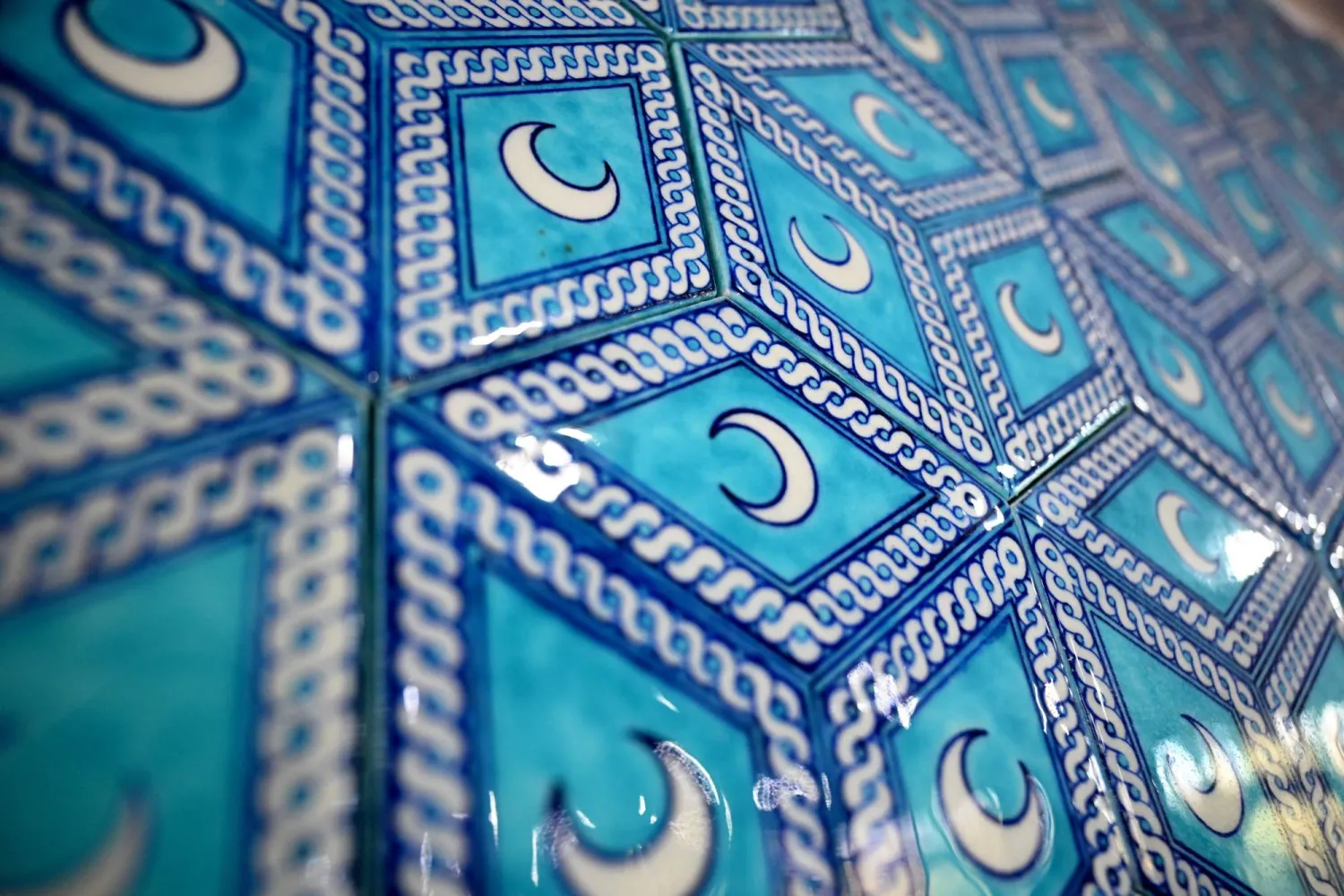
This photograph shows traditional Turkish patterns painted on tile in Iznik on October 31, 2025. (AFP)
TT

Rediscovering Iznik’s Lost Art of Vibrant Ottoman Tilemaking 

This photograph shows traditional Turkish patterns painted on tile in Iznik on October 31, 2025. (AFP)

For over 300 years, the closely-guarded secrets of the Ottoman Empire's luminous tilework was lost, but its rediscovery has revived a key part of Türkiye's cultural heritage.

Renowned for intricate designs and lustrous colors, Iznik tiles are considered the pinnacle of Ottoman art, gracing monuments such as Istanbul's Blue Mosque and Topkapi Palace.

The tiles come from Iznik, a small town near Istanbul with a ceramics tradition spanning two millennia also known as Nicaea, which hosted a landmark Christian gathering in 325 AD that Pope Leo will celebrate when he visits this month.

Under the patronage of the Ottoman Empire, Iznik's artisans flourished, obtaining "remarkable achievements" by the mid-16th century, said Professor Ezgi Yalcinkaya, head of traditional Turkish arts at Usak University.

They developed a high-quartz stonepaste, known as fritware, yielding a bright white background ideal for decorating, transparent glazes and vibrant colors, including a "coral red" for floral designs which "created a distinctive new style", she told AFP.

But when the Ottoman Empire began to decline in the 17th century, the workshops started to close and the artisans, mainly Greeks and Armenians who knew the formula for the stonepaste, the colors and glazes, died off.

"Knowledge was passed entirely through master-apprentice relationships. The specific formulas -- especially for the coral red and fritware composition -- were oral secrets," she said.

"Without documentation, the expertise died with the last masters. By the 18th-19th centuries, the technical knowledge was largely lost."

Centuries later, an economics professor called Isil Akbaygil with a passion for Ottoman art set up the Iznik Foundation in 1993.

Her research project brought together experts and academics to rediscover the lost secrets of Iznik's prized ceramics.

"What was forgotten about isn't so much the raw materials themselves as how they're combined... the firing temperatures and methods to achieve the distinctive coral red," said Kerim Akbaygil, a foundation board member and one of her sons.

"The foundation spent almost two years trying to get the right recipe, working with different universities like MIT, Princeton and Istanbul Technical University," he said.

"It was trial and error, but we finally got it right," he told AFP at the foundation's headquarters, a rustic red-tiled building set in lush gardens lined with richly-colored tile paths.

"Iznik tiles are the only tiles in the world that use up to 85 percent quartz which we use in the raw material along with clay and silica," he said.

They are underglazed with a high ratio of quartz giving them a "brightness and depth that are characteristic of Iznik tiles," he said.

Decorated with metal oxides whose colors are rendered vivid through the firing process, they are then coated with a quartz-based glaze known as "sur" -- Turkish for "secret".

Jars of colors -- from vibrant cobalt blues and emerald greens to coral reds -- line the shelves inside a large upper room where a dozen women sit painting tiles or transferring designs onto plain white tableware.

Many are painting an enormous mural for a train station -- one of the foundation's trademark commissions, its stunning tile facades a distinctive feature of the Istanbul metro and beyond.

Adding shadow to a giant fig leaf, Yasemin Sahin, 42, admits she's captivated by the transformation that occurs with firing.

"I'm painting this, but I don't know what it will look like when it comes out of the kiln after it's glazed. It's always a surprise, that's the beauty of it," she told AFP.

Three decades on and Iznik tiles are now seen on buildings across Türkiye, from colleges to coffee shops, with the foundation's international reach spreading form Japan to Canada.

"Back in the day, Iznik tiles were sponsored by the palace, so the only place you could see them was inside the palaces or mosques. Now that taboo is broken," Akbaygil says.

Yalcinkaya said the collective significance of rediscovering the lost formulas was "tremendous" and the result of extensive research by many academics and scholars.

"These efforts revived a living tradition," she told AFP.

"Ottoman ceramicists continuously innovated from the 14th-20th centuries. Today's work continues this spirit, ensuring the tradition remains alive and relevant, which is the most authentic way to preserve cultural heritage."



Heritage Commission Revives Al-Nasb Heritage District as Abha Cultural Tourism Destination

The district’s significance lies in its unique architectural composition - SPA
TT

Heritage Commission Revives Al-Nasb Heritage District as Abha Cultural Tourism Destination

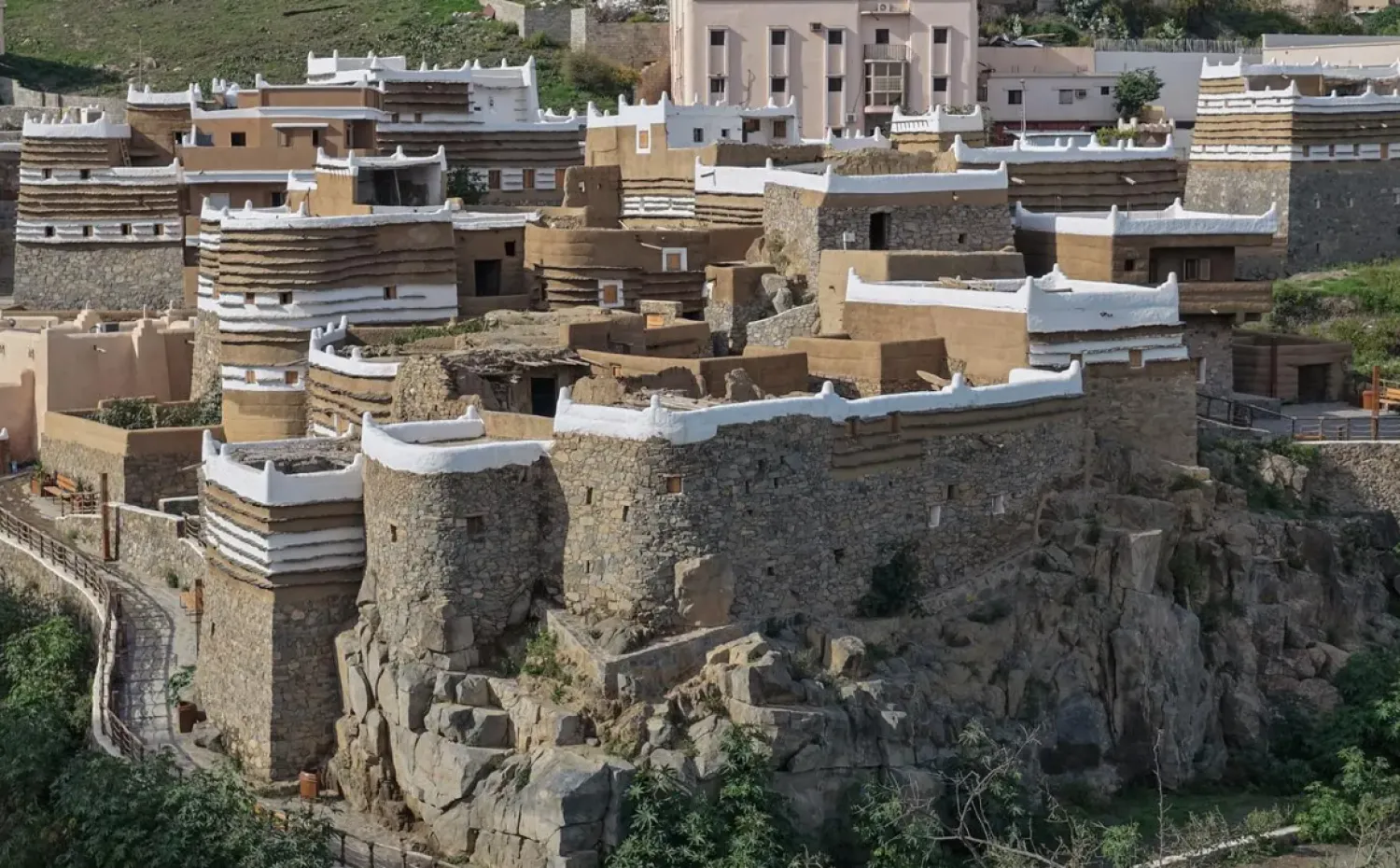
The district’s significance lies in its unique architectural composition - SPA

Al-Nasb Heritage District in Abha is one of the most prominent living examples of traditional architecture in Aseer Region, preserving its long history and architectural details that embody people’s connection to their local environment and document the social and cultural patterns that have shaped the identity of the place across generations.

The district’s significance lies in its unique architectural composition, where mud and stone buildings stand side by side in visual harmony. They were built using local materials such as stone, clay, and juniper trunks, while the narrow alleyways and closely set buildings give the district a cohesive social character that reflects the spirit of past communities in the region and the close relationship between people and place.

The Heritage Commission has revived the district through an integrated restoration and rehabilitation project aimed at preserving its original elements and enhancing its sustainability, as part of national efforts to protect urban heritage and highlight it as a cultural and tourism asset, SPA reported.

The site is also distinguished by its natural setting, as the district overlooks the banks of Abha Valley and surrounding farms, giving it a distinctive visual and aesthetic dimension. Its narrow passageways and closely set buildings illustrate a traditional urban pattern that strengthens ties among residents and captures the nature of social life in that era.

The district is now a growing destination for culture and tourism in Abha, attracting visitors and heritage enthusiasts who come to explore the details of authentic architecture and learn about the traditional ways of life that have shaped Aseer Region’s identity across generations. The project helps raise awareness of the importance of preserving archaeological sites as a key pillar in forming national memory.

The project is part of the Kingdom’s efforts to protect and effectively manage cultural heritage, in line with the targets of Saudi Vision 2030, which gives special attention to the cultural sector. It seeks to turn heritage sites into vibrant spaces that support cultural tourism and sustainable development while reconnecting society with its historical roots.


Saudi Heritage Commission Enforces Strict Penalties Against Antiquities Violators

The fines varied according to the nature and circumstances of each violation
TT

Saudi Heritage Commission Enforces Strict Penalties Against Antiquities Violators

The fines varied according to the nature and circumstances of each violation

The Saudi Heritage Commission announced financial fines against 11 violators for dealing in portable antiquities without obtaining the required regulatory licenses, as part of its ongoing efforts to protect cultural heritage in the Kingdom and enhance compliance with regulations governing the sector.

The commission clarified that the violations involved displaying and selling antiquities on online platforms without registering or documenting them with the Heritage Commission or obtaining the necessary licenses, in explicit violation of the provisions of the Law of Antiquities, Museums and Urban Heritage.

The fines varied according to the nature and circumstances of each violation, reaching up to SAR15,000 in some cases.

The commission reaffirmed its commitment to monitoring violations related to heritage sites and collections across the Kingdom and taking the necessary legal and regulatory actions against all those proven to have contravened the regulations.

The Heritage Commission called on all citizens and residents to report any violations or non-compliant practices related to heritage sites or collections through its social media channels, by visiting its branches across the Kingdom, through the Archaeological Site Reporting platform, or by contacting the unified security operations center at 911.


Holy Quran Museum Showcases Rare 18th-Century Brass-Engraved Copy of the Quran

Among the museum’s distinctive exhibits is a copy of the Quran engraved on brass plates dating back to the 12th century AH - SPA
TT

Holy Quran Museum Showcases Rare 18th-Century Brass-Engraved Copy of the Quran

Among the museum’s distinctive exhibits is a copy of the Quran engraved on brass plates dating back to the 12th century AH - SPA

The Holy Quran Museum in the Hira Cultural District in Makkah offers a rich cultural and knowledge experience, enabling visitors to explore the history of the Holy Quran and its sciences, and view rare manuscripts and artifacts documenting the journey of its transcription through the ages, reflecting the care Muslims have given to the Holy Quran since the dawn of Islam to the present day, SPA reported.

Among the museum’s distinctive exhibits is a copy of the Quran engraved on brass plates dating back to the 12th century AH (18th century CE), showcasing the precision and mastery achieved in Islamic arts and the special attention given to Quranic transcription, combining beauty and scholarly accuracy.

This artwork embodies a continuation of deep-rooted traditions in Islamic calligraphy and decorative arts, utilizing various materials and techniques from parchment and paper to metals, highlighting Muslims’ profound connection to the Holy Quran and their commitment to preserving it in artistic forms that combine creativity and reverence.